

How Do I Trade In My Car With an Upside-Down Loan?
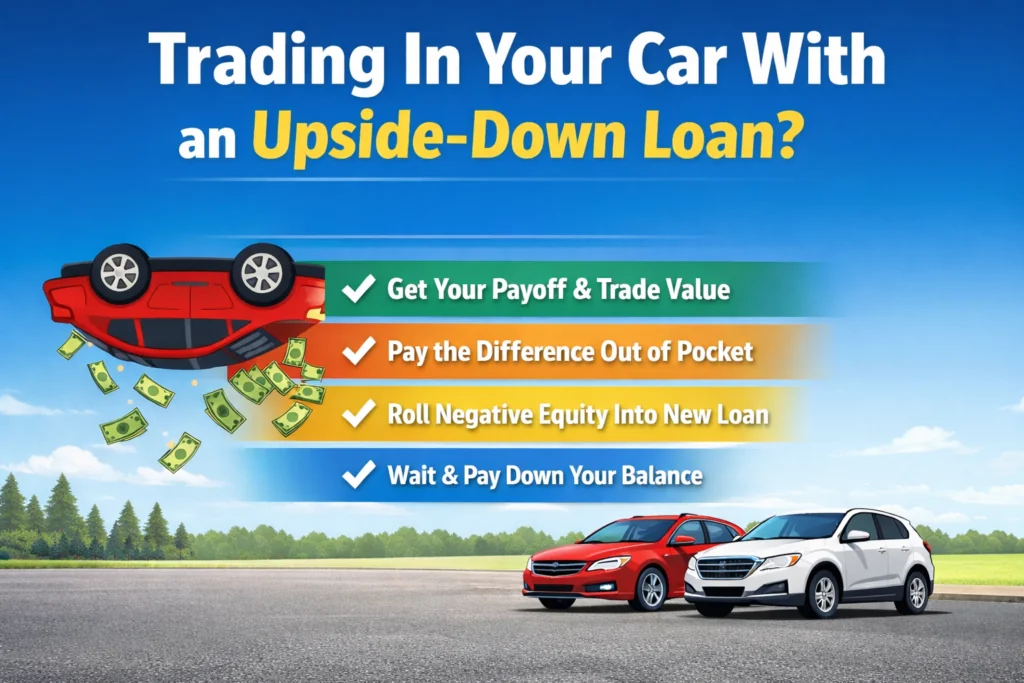
You can trade in a car with an upside-down loan by paying the difference, rolling the negative equity into a new loan, choosing a vehicle and loan structure that keeps the rollover small, or waiting until you owe less than the car is worth.
If you’re in Spokane, Spokane Valley, Hayden, or Post Falls and you owe more than your car is worth, you’re dealing with negative equity. That can feel like a dead end, but it’s a common situation, and there are straightforward ways to handle it.
This guide breaks down your options, what to bring, what to watch for in the paperwork, and how to avoid ending up upside down again.
Quick definition: what “upside down” means
You’re upside down (you have negative equity) when your loan payoff is higher than your vehicle’s trade-in value.
Here’s the simple math:
- Trade-in value: $8,000
- Loan payoff: $12,000
- Negative equity: $4,000
When you trade, that gap has to be covered somehow. It’s either paid today or carried into the next loan.
Why negative equity happens so often
Cars typically lose value over time, and the loan balance doesn’t always fall as fast as the vehicle value.
Negative equity is more likely when you have:
- A long loan term or high interest rate
- A small (or no) down payment
- Add-ons rolled into the loan amount
- High mileage from commuting and road trips
- Damage or accidents that reduce market value
Step 1: Get two numbers before you shop
1) Your loan payoff amount
Call your lender and ask for your current payoff amount.
2) Your real trade-in value in your area
Online tools help, but appraisals reflect real local demand and current market pricing. The FTC also recommends checking multiple valuation sources (like NADA Guides, Edmunds, and Kelley Blue Book) before negotiating.
When you have both numbers, you’ll know your negative equity amount, and you’ll be able to pick the best strategy.
Step 2: Choose how to handle the negative equity
Below are the four most common ways drivers in the Inland Northwest trade in with an upside-down loan.
Use this table to quickly decide what fits your budget.
| Option | Best for | Upside | Trade-off |
| Pay the difference out of pocket | Small negative equity | Clean reset, smaller new loan | Requires cash today |
| Roll negative equity into a new loan | Need to switch vehicles now | Allows an immediate trade | Bigger loan, you pay interest on the rollover |
| Reduce the rollover with vehicle choice + deal structure | Moderate negative equity | Keeps payment and loan size more manageable | Requires careful shopping and discipline |
| Wait and pay down the balance | Current vehicle is reliable | Often the lowest-cost move | Delays the upgrade |
Option A: Pay the difference (the cleanest reset)
If your negative equity is small, paying it off at the time of trade is usually the simplest route. You start the next loan without carrying old debt.
This tends to help you by:
- Keeping the new loan amount lower
- Reducing monthly payment pressure
- Helping you build equity faster on the next vehicle
Option B: Roll the negative equity into a new loan (the common path)
Yes, you can trade in while upside down by rolling the remaining balance into your next auto loan.
This works like this:
- The dealer payoff is sent to your current lender.
- Your trade value is applied to the deal.
- The remaining gap (negative equity) is added to the new amount financed.
The catch is cost. Rolling negative equity increases the loan amount, and you typically pay interest on that rollover, too.
Option C: Reduce the rollover with smart vehicle and loan choices
If you need to trade now but you want to avoid digging a deeper hole, your best “middle-ground” strategy is controlling the next loan.
Choose a vehicle that helps you recover faster
A reasonably priced vehicle with slower depreciation can help you get back to positive equity sooner.
Keep the term realistic
Longer terms can lower the payment, but they can also keep you upside down longer. Experian specifically warns that longer repayment periods may increase negative equity risk on the next loan.
Bankrate notes that auto loans are commonly in the 36–84 month range, so it’s worth comparing how different terms change total cost.
Use a down payment (even a modest one)
A down payment can reduce how much negative equity gets carried forward. Depending on the situation, a lender may require it to make the deal work.
Option D: Wait and pay down the loan
If your current vehicle is dependable, waiting can be the most cost-effective move. The FTC notes that one way to deal with negative equity is to wait until you have positive equity, including by paying down the loan faster when possible.
This option is especially strong if:
- Your negative equity is large
- Your interest rate is high
- You don’t need a different vehicle right now
Step 3: Protect yourself in the paperwork
A big “People Also Ask” question is: “If the dealer pays off my loan, am I still responsible?”
You’re responsible until the loan is actually paid off, so you want to be clear on exactly how the negative equity is handled. The FTC warns that some offers can be misleading, because the negative equity may be rolled into the new loan (or pulled from your down payment).
Here’s what to do before you sign:
- Ask: “Where is my negative equity shown on this contract?”
- Look closely at the down payment line, amount financed, and any payoff line items.
- Read the disclosures and confirm you understand the full amount financed before signing.
The CFPB also advises reading the contract carefully and not signing until you’re comfortable with the terms.
Step 4: Consider GAP coverage if you’re rolling negative equity
When you roll negative equity, you can end up owing more than the vehicle is worth for a while. That’s exactly when many drivers ask about GAP.
The CFPB explains that Guaranteed Asset Protection (GAP) is an optional product intended to cover the difference between what you owe and what your auto insurance pays if the vehicle is stolen or totaled.
The FTC also notes that add-ons like GAP insurance are optional, and it’s okay to say no if it doesn’t fit your budget.
What to bring to a trade-in appraisal at Auto Credit Sales
Having the right items helps the process move quickly.
| What you need | Why it matters |
| Driver’s license | Identity verification |
| Current loan info | Needed to request payoff and confirm lienholder |
| Registration and insurance | Helps verify ownership and coverage |
| All keys/fobs | Impacts value and reconditioning |
| Maintenance records (if you have them) | Can support vehicle condition and value |
If you’re not sure who your lienholder is or how to find payoff info, your finance team can usually help you track it down.
A simple checklist for trading in while upside down
- Get your payoff from your lender.
- Estimate your value using at least one reputable pricing guide and then get a real appraisal.
- Calculate your negative equity amount.
- Pick a strategy: pay it, roll it, reduce it, or wait.
- Choose a vehicle and term that won’t trap you upside down again.
- Review the contract carefully and confirm the negative equity is disclosed and understood before signing.
How to avoid being upside down again
If you want the short version: borrow less, for less time, on a vehicle that holds value.
Practical ways to do that:
- Put money down when possible
- Avoid stretching the loan term just to chase a lower payment
- Keep add-ons in check if they push the amount financed too high
- Keep up with maintenance to protect resale value
- Refinance later if your credit improves (when it makes sense)
Trade-in help in Spokane, Spokane Valley, Hayden, and Post Falls
Trading in with negative equity is doable, but the best outcome depends on knowing your numbers and structuring the next loan the right way. The key is making sure the negative equity is handled transparently and that your next vehicle and loan don’t set you up to repeat the cycle.
Auto Credit Sales helps drivers across Spokane, Spokane Valley, Hayden, and Post Falls understand their payoff, appraise their trade, and compare options that fit their budget. If you’re ready to explore your trade-in options, stop in for an appraisal and a clear breakdown of your next steps.
Frequently Asked Questions About Trading In a Car With an Upside-Down Loan
Can I trade in a car that isn’t paid off yet?
Yes. The trade process typically includes paying off your current loan, but you should confirm exactly how the payoff and any negative equity are handled in the new contract.
Will trading in with negative equity raise my monthly payment?
It can. Rolling negative equity increases the amount financed, which can increase your payment and the total interest you pay.
How do I know how much negative equity I have?
Subtract your trade-in value from your lender payoff amount. Checking reputable pricing guides before negotiating can also help you estimate value.
Is it better to pay off negative equity before trading in?
If you can, paying it off (or at least reducing it) can lower your next loan amount and reduce the chance you stay upside down.
Can a dealer “pay off my loan no matter what”?
Be careful with that wording. The FTC warns that some offers can be misleading if the negative equity is simply rolled into the new loan or taken from your down payment. Always review the contract and disclosures.
Should I get GAP coverage if I roll negative equity into my next loan?
Many people consider it in that situation. The CFPB says GAP is optional and is intended to cover the difference between what you owe and what insurance pays if the vehicle is totaled or stolen.